Unleash Creativity with Collage Art Backgrounds
If you work in digital design, crafting, or content creation, you know the struggle of finding the perfect backdrop. A plain color can feel flat, and a stock photo might not capture the eclectic energy you need. This is where Collage Art Backgrounds come into play. They are not just textures; they are complex, layered compositions that bring depth, personality, and a tangible sense of artistry to any project. Designed for those who use Adobe Photoshop, Photoshop Elements, or Paint Shop Pro, these backgrounds offer a unique aesthetic that bridges the gap between traditional mixed-media art and modern digital design.
Understanding the Visual Personality
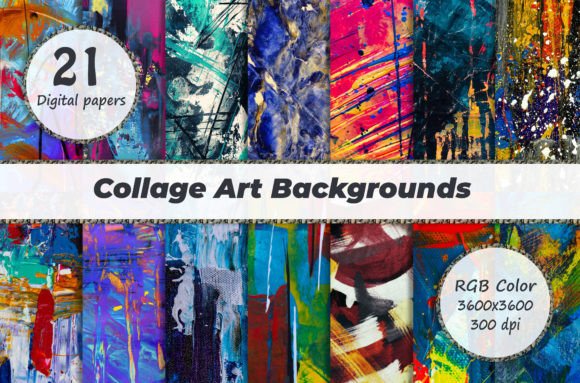
When we talk about collage art, we are referring to a specific visual language. It is a blend of torn edges, overlapping papers, painted textures, and vintage ephemera. The 21 digital papers included in this set embody this style fully. Each 3600 x 3600px file is a high-resolution composition that feels handmade yet polished. The visual characteristics include a rich variety of textures—think crumpled kraft paper, distressed ink strokes, and subtle geometric patterns layered under soft washes of color. The "personality" of these backgrounds is eclectic and artistic. They tell a story of construction and creativity, making them ideal for projects that need to convey authenticity and a hands-on approach.
Unlike a standard display font or a clean sans serif font, these backgrounds provide the stage upon which your other design assets can perform. They have a warmth that sterile digital elements often lack. For a designer or a small business owner, this means you can instantly elevate a project from looking "computer-generated" to looking "crafted." The visual style is versatile enough to be playful for children's products or sophisticated for high-end editorial design, depending on the elements you layer on top.
Practical Applications Across Industries
The utility of Collage Art Backgrounds extends far beyond simple scrapbooking, though they excel there as well. For the entrepreneur or marketer, these files solve specific creative problems. Consider the challenge of creating a unique brand identity. A collage background can serve as the foundational texture for a logo design or the background of a business card, setting a brand apart from competitors who rely on generic stock imagery.
Here is where these assets fit into real-world workflows:
- Digital Content and Social Media: In the fast-paced world of social media graphics, stopping the scroll is essential. These textured backgrounds create a tactile feel that draws the eye. They are perfect for quote cards, promotional banners, and Instagram stories where you want to layer text using a script font or a handwritten font.
- Publishing and Editorial Design: If you are working on a magazine layout or a book cover, collage backgrounds add immediate visual interest. They work exceptionally well behind headlines set in a bold serif font, creating a hierarchy that feels both professional and artistic.
- Packaging and Product Design: For small business owners creating product labels, bottle caps, or jewelry packaging, the 300 dpi resolution ensures that prints are crisp and professional. The eclectic nature of the art pairs well with vintage or bohemian product lines.
- Personal Projects: From birthday party invitations to custom cell phone covers and digital albums, these backgrounds allow hobbyists to create professional-grade items without needing advanced illustration skills.
Integrating with Modern Typography and Design Tools
One of the most common questions regarding textured assets is how they interact with typography. A busy background can easily swallow text, rendering a message unreadable. The key to success with Collage Art Backgrounds is understanding contrast and legibility. Because these backgrounds often feature mid-tone textures and varying color values, they act as a canvas that supports, rather than competes with, your typography.
For example, if you are using a delicate premium font for a wedding invitation, you might place a semi-transparent overlay or a "knockout" shape over the busiest part of the collage to ensure the text remains the focal point. Conversely, if you are using a heavy, industrial typeface for a poster, the organic nature of the collage can soften the design, creating a balanced visual tension.
When working in Photoshop or Paint Shop Pro, utilizing layers is non-negotiable. You will likely need to stack your background, a blending layer, your text, and perhaps some additional graphic elements. For Lightroom users, the note to ensure you have a plugin that supports layers is crucial. Lightroom is primarily a photo editing tool, not a compositing tool. To truly manipulate these backgrounds—adjusting the opacity, changing blend modes like "Multiply" or "Overlay," and masking out sections—you need the power of a layer-based editor.
Evaluating Fit and Workflow
Before you commit to a design direction, consider the "noise" level of the specific collage paper. Some files in this set are subtle with muted tones, perfect for web design backgrounds where readability is paramount. Others are vibrant and chaotic, better suited for a focal point in a scrapbook or a print-on-demand t-shirt design.
When pairing these backgrounds with other design assets, look for balance. If the background is highly textured and "busy," pair it with clean, geometric fonts—think modern modern typography styles. If the background is softer and more watercolor-based, you can afford to be more expressive with your font choices, perhaps utilizing a flowing creative font.
Maximizing Value in Commercial Projects
For those using these assets for commercial purposes—such as selling digital invitations, creating merchandise, or designing client work—the value lies in the versatility of the set. Having 21 distinct options allows for variety within a single campaign. You can maintain a consistent aesthetic across a brand identity system while ensuring that not every piece looks identical.
The high resolution (300 dpi) is a significant advantage for print-based projects. Many digital assets are optimized only for screen use (72 dpi), which leads to pixelation when printed. With these Collage Art Backgrounds, you have the freedom to scale up for large format printing or scale down for intricate details like nail wraps or magnets without losing quality.
Ultimately, these backgrounds are tools for storytelling. They provide the atmosphere and context that static designs often lack. Whether you are a blogger looking to enhance your visual content, a crafter designing a personalized gift, or a marketer building a campaign, the ability to layer, blend, and manipulate these textures opens up a world of creative possibilities that standard stock photos simply cannot match.